November Program Details Announced

Roberts Hicks presents the post war stories of two wounded Civil War Veterans

Many Civil War books discuss the mortality due to bullets and diseases but very few explore the postwar lives of wounded warriors. Based on his new book, Wounded for Life: Seven Union Veterans of the Civil War, Dr. Robert Hicks examines two Union veterans, Thomas Hawkins and Richard Dunphy. Hawkins, an African American sergeant major, was wounded four times at two battles near the James River in Virginia and never recovered. Irish immigrant Dunphy, a sailor aboard USS Hartford, was injured by an exploding shell during the Battle of Mobile Bay and suffered the amputation of both arms. Each awarded the Medal of Honor, both men later worked, married, and had children, yet the war changed their bodies and their relationships with families and communities. Dr. Hicks looks at how they constructed new identities while living with the trauma of the battlefield.

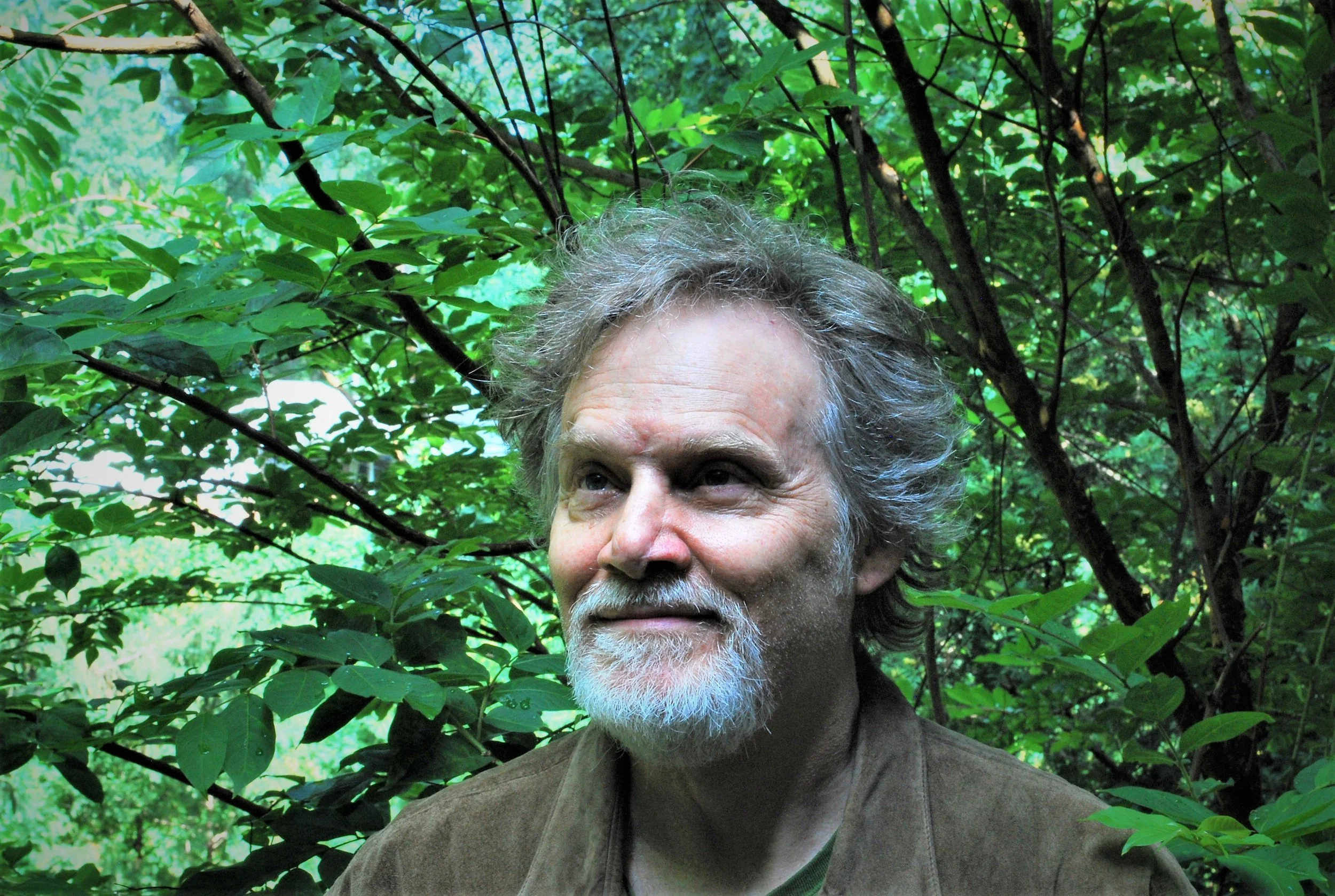
 Robert D. Hicks, PhD is an independent scholar of the history of science and medicine. Formerly, he served as director of the Mütter Museum and Historical Medical Library and William Maul Measey Chair for the History of Medicine at the College of Physicians of Philadelphia. He has worked with museum-based education and exhibits for four decades, primarily as a consultant to historic sites and museums. His most recent book, Civil War Medicine: A Surgeon’s Experience, appeared in 2019 by Indiana University Press. This presentation derives from his new book, Wounded for Life: Seven Union Veterans of the Civil War

From the Brigade Commander November 2025

In our October, 2025, newsletter, we teased a potential new project: Setup a temporary (pop-up) museum in downtown Bethlehem to draw attention to our Round Table and, in the process, make our own, unique contribution to America 250 celebrations taking place around the country.

This month, I’m thrilled to report that hard work and determination really can make dreams come true. This, thanks to the efforts of Round Table members, Jack Stanley and Ed Root, and the support from what is now a list of several Bethlehem organi- zations, historical organizations and notable guest speakers.

You can read more about the pop-up museum in the Oct 16th article online in Brigade News or on page 3 on the November Newsletter. In that same newsletter you’ll also find information about the speaker for our November meeting, Civil War book releases scheduled for November, and a biography about his month’s featured Civil War Medal of Honor recipient, James Allen.

Barry

October Meeting and Highlights

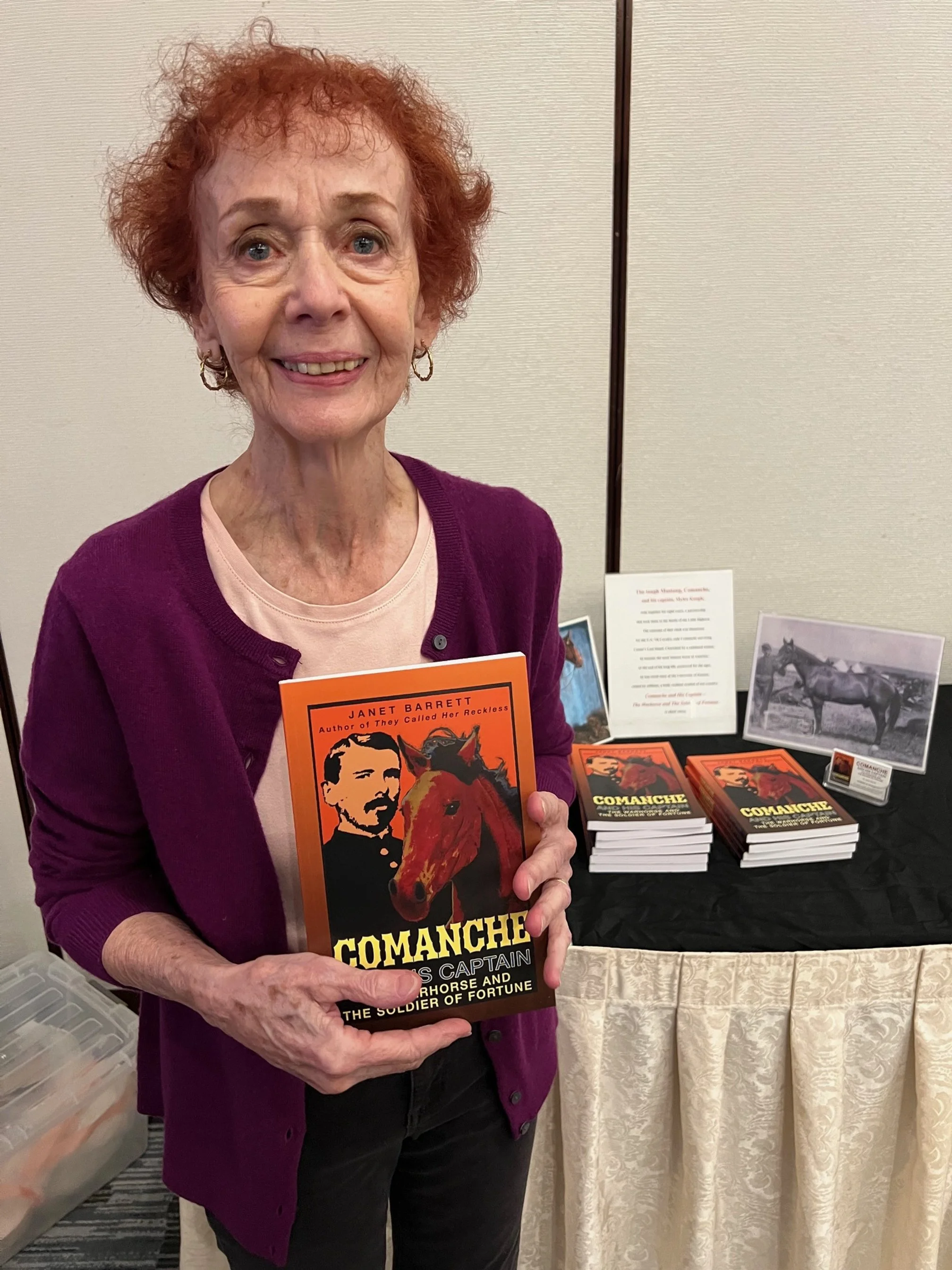
Our October Meeting was highlighted with a captivating presentation by Janet Barrett presenting “Comanche and His Captain:  The Warhorse and the Soldier of Fortune”

Set against the Civil War and the fight to secure the western frontier, the story of the soldier of fortune, Captain Myles Keogh, and the tough Mustang, Comanche, was a tale of bravery, partnership, survival, and healing.

     Keogh was one of many Irishmen who were professional soldiers, but who refused to fight under the English flag. He brought his talents to America to fight for the Union in the Civil War, and then with the newly formed U.S. Seventh Cavalry.

Barrett spoke of of the horse, the riders, the a farrier, and Comanche’s evetual place of honor in Kansas to this day.

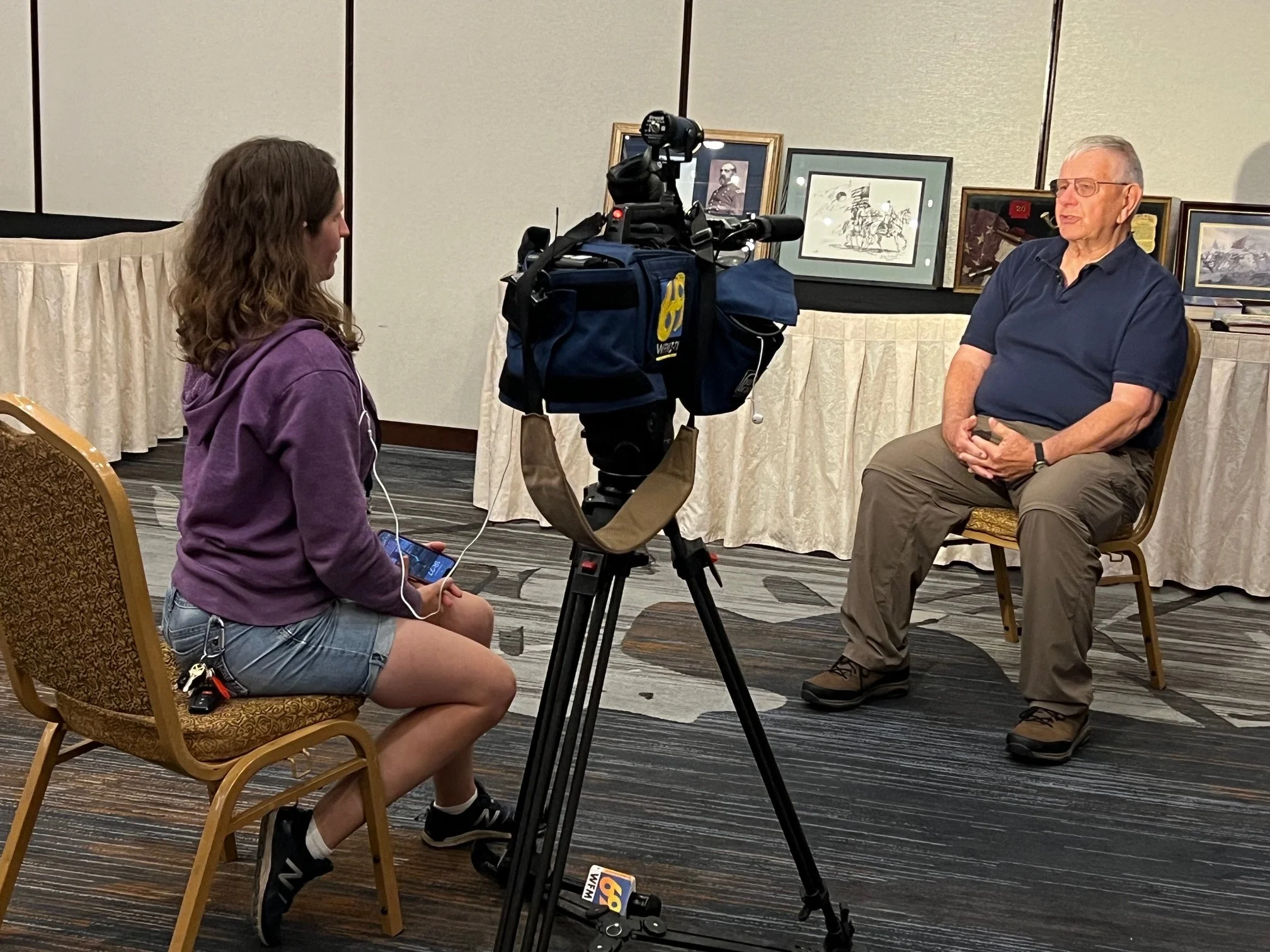
Before the program, a videographer from WFMZ was present to interview Ed Root and Laura Kleinschmidt; and then record portion of the program for a news segment to be aired at a future date.

We also wished farewell to Neil and Kathy Coddington, as they prepare to move to Lititz.

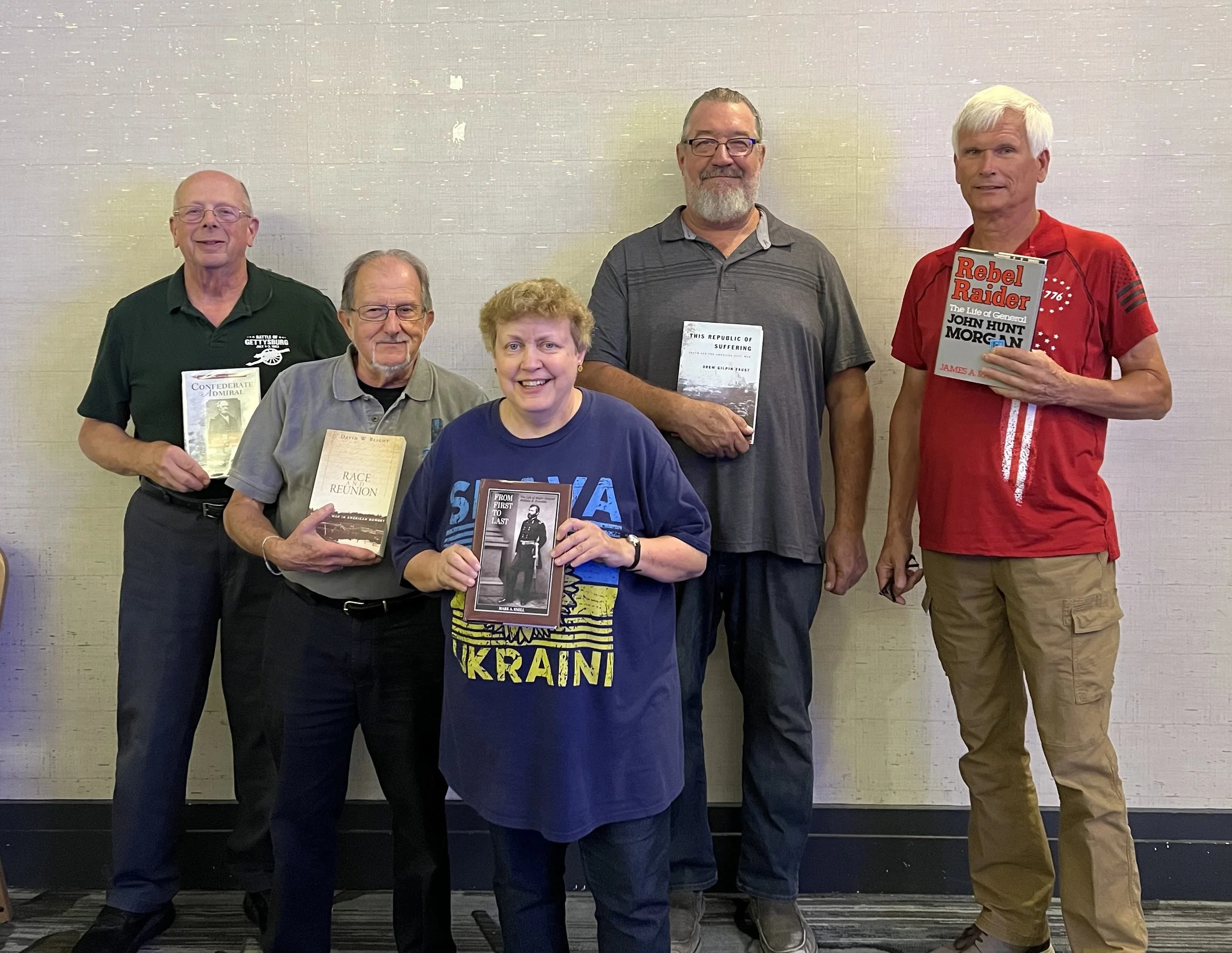
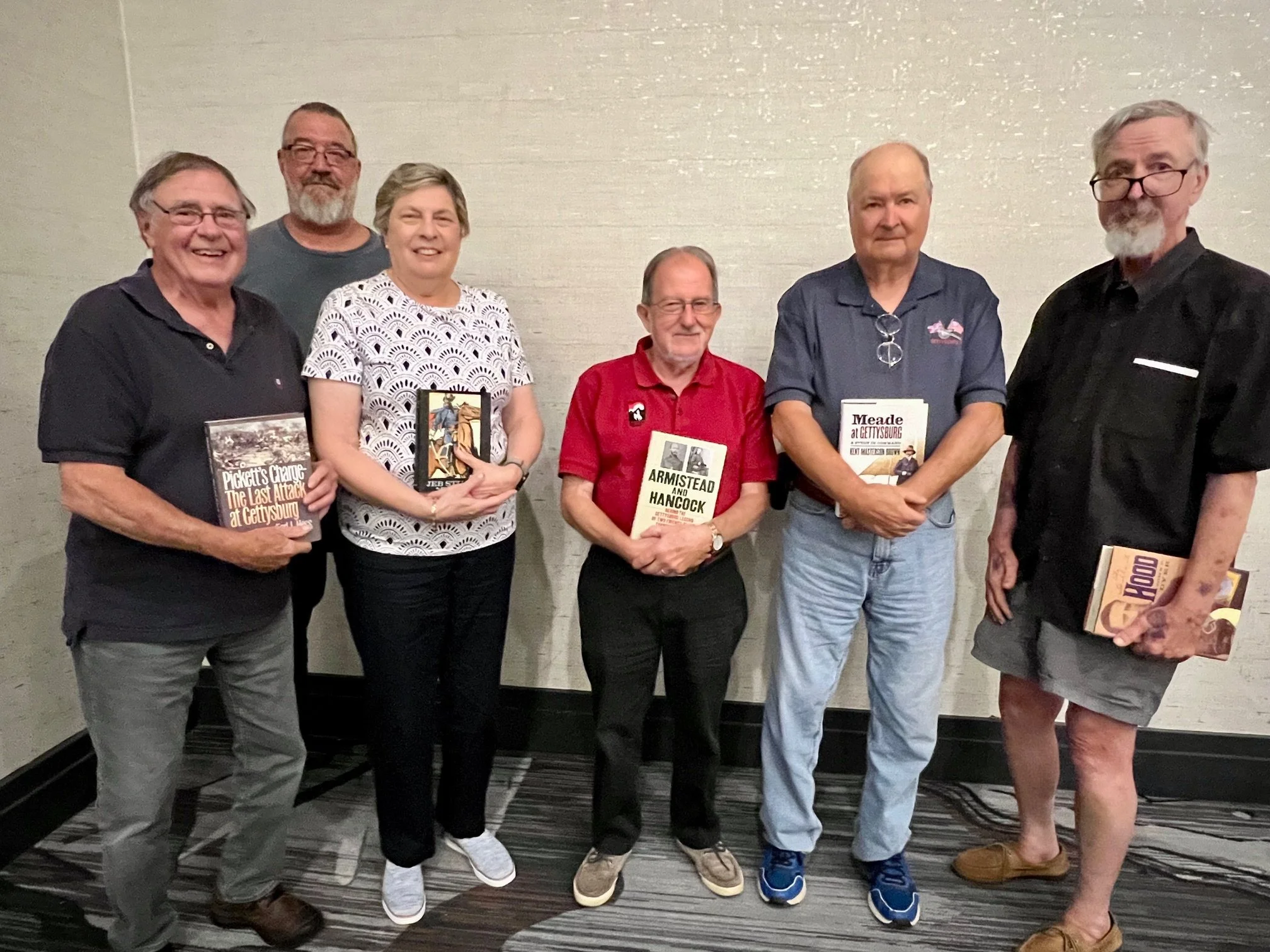
Finaly below is pictured our monthly Book Raffle winners, with all proceed going to Preservation.

From the Brigade Commander ~ October 2025

Ron Kirkwood, the guest speaker for our September meeting, authored two books, published over a five-year span, that share experiences of those whose lives were impacted by their time at/near the Spangler Farm in Gettysburg—both the soldiers who fought there and the Spangler family, owners of land where fighting took place in 1863. In doing so, Ron has gifted us with “snapshots” that offer a greater and intimate understanding of the fighting at/near the Spangler Farm and its varied outcomes and impacts.

After three years of painstakingly sifting through available online ancestry information, the folks Ron eventually reached out to were recipients of a great gift: Knowledge that one of their ancestors had fought in the Battle of Gettysburg, either on or near to the Spangler Farm property. In doing so, Ron has done more than add to already existing documentation of an important chapter in American history. He has invited more people to join in the important work of keeping alive Civil War history.

Although Ron’s efforts and our Round Table’s stated purposes may be somewhat different, we and he are essentially on the same mission. I can’t think of a better person to have helped us to kick off our Round Table’s Campaign 48.

We’re off to a great start! And I am looking forward to seeing you on Tuesday, October 7th.

Barry

October Program Details Announced

Janet Barrett presents “Comanche and His Captain:  The Warhorse and the Soldier of Fortune”

Set against the Civil War and the fight to secure the western frontier, the story of the soldier of fortune, Captain Myles Keogh, and the tough Mustang, Comanche, is a tale of bravery, partnership, survival, and healing.

               Keogh was one of many Irishmen who were professional soldiers, but who refused to fight under the English flag. He brought his talents to America to fight for the Union in the Civil War, and then with the newly formed U.S. Seventh Cavalry.

Given command of Company I, he took his men across Kansas to Fort Wallace, a hot bed of Indian fighting on the edge of the frontier. Soon, the shrewd choice of Comanche gave him the horse he wanted and an extraordinary partnership that would last for eight years, eventually taking them to the Battle of the Little Bighorn.

               The outcome of that clash was disastrous for the cavalry. But, when rescuers arrived on the battlefield, they found Comanche standing alone among the fallen, wounded and exhausted, but still alive – and whinnying to the men.

               On our country's 100th anniversary, the Little Bighorn debacle sent shock waves across the country. Yet, people were comforted in knowing that the brave Comanche had survived. He became the most famous horse in America, honorary Second Commanding Officer of the Seventh Cavalry. Preserved at the end of his long life, he stands at the University of Kansas, to this day still a bold, resilient symbol of America.


    Janet Barrett remembers her father first telling her about Comanche when she was about eight years old, a simple story then about a horse that survived a battle. When she revisited it as an adult, a few years ago, she found an intriguing, complex story--of a horse and rider whose legacy grew beyond anything that was apparent in their lives. Through her experiences as a horsewoman she found herself particularly fascinated with the connection between Comanche and Keogh, as well as times when the horse was central to life.

            Her other books are On The Fence: A Parent's Handbook of Horseback Riding and They Called Her Reckless--A True Story of War, Love And One Extraordinary Horse. With the success of the latter, about another famous warhorse, Barrett knew it was time to go back to that earlier era and tell the whole story of the tough Mustang that brought fame to himself and his rider, and the U.S. Cavalry. She was raised in New York, graduated from Indiana University with a B.S. in Communications, and now makes her home in Connecticut.

September Meeting Highlights and Photos

September opened a new campaign year, with our commander inviting Claire to speak about possible field trips for October 25th (see related post in Brigade news), and talking about how Jack Stanley’s curiosity led to the amazing discovery of forgotten historical documents in a cornerstone in downtown Bethlehem and an invitation to to place a pop-up civil war display in town during the Christmas shopping season.

Laura introduced our featured speaker - Ron Kirkwood who returned to the roundtable to talk about his second book on the Spangler Farm and the strories of soldiers and families connected to that site.

Kirkwood, who led roundtable members on an up close and personal tour of the farm a few years ago, kept the room in rapt attention throughout his presentation. Finally amazing us all, he revealed that in his genealogies of families connected to the farm he discovered that his own was among them!

“Tell Mother Not to Worry”: Soldier Stories From Gettysburg’s George Spangler Farm is a wonderful product from the mind, research, and pen of Kirkwood who retired after a 40-year career in newspapers and magazines including USA TODAY, Baltimore Sun, Harrisburg (PA) Patriot-News, York (PA) Daily Record and Midland (Mich.) Daily News. He is a Michigan native and a graduate of Central Michigan University (just like our own Gary Schnell), where he has returned as guest speaker to journalism classes as part of the school’s Hearst Visiting Professionals series. Ron and his wife of 49 years, Barbara, now live near their grandkids in the deer-filled countryside outside of Pittsburgh.

As always we held our monthly book raffle for preservation, with the winners pictured below.

From the Brigade Commander ~ September 2025

The decision to make September the kick-off month for each campaign year of the Round Table of Eastern Pa. was likely determined by following the notion that “back to school” signaled the end of summer. Whatever the reason for a September start, here’s what’s important to remember:

The Civil War was fought in 10,000 places. Further, as many as 100,000 books are thought to have been written on the subject. With these statistics in mind, it seems there are plenty of opportunities left to learn something new, no matter how long you’ve been studying.

We’ll get started on our Campaign 48 journey on Tuesday, September 2, just one day after Labor Day. September meeting lecture and dinner sign-up instructions can be found on page 2 of our September Brigade Call newsletter.

Hope to see you there.

Barry

Why Our Conservation Work at Nisky Hill Is Important

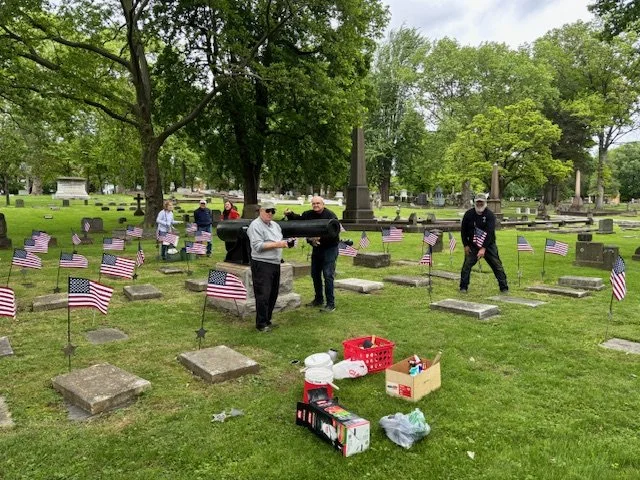
Nisky Hill Preservation Work 2025

This guest post is from Emerging Civil War.
It speaks to our preservation work at Nisky Hill.

Emerging Civil War

Will We Remember the Fallen of Long-Ago Wars?

By ECW Guest Post on August 3, 2025

Emerging Civil War welcomes Andrew C.M. Mizsak, M.A.P., MBM

In June, my wife and I attended a presentation by New York Times Best Selling Author Robert M. Edsel, whose book, The Monuments Men, became a 2014 feature film.

Mr. Edsel spoke about his latest work, Remember Us. It relates the story of the citizens of Margraten, Netherlands, and how they have cared for the 10,000 graves of American soldiers interred in the American Netherlands Cemetery. The grave adopters’ program was started by the wife of the mayor of Margraten during WWII and has evolved into the program where all the graves have caretakers. Moreover, there is even a waiting list to become a grave adopter. The care of many of the graves has remained in the same families since the end of WWII.

According to Mr. Edsel, the grave adopters customarily decorate the headstones on Memorial Day, Veterans’ Day, the birth and death dates of the fallen, and other days, such as Christmas or other holidays.

There are 156 National Cemeteries in the United States that are administered by the United States Department of Veterans’ Affairs (www.cem.va.gov). There are also countless other cemeteries administered by state and local governments, historical, religious, and other organizations that serve as the resting place of fallen heroes of long-ago wars.

These cemeteries assure that flags are placed at headstones of our veterans for Memorial Day, and many participate in the Wreaths Across America program in December. An example of a local cemetery providing these honors is the Woodland Cemetery Foundation in Cleveland, which has also created monuments to the 7th Ohio Volunteer Infantry and the 23rd Ohio Volunteer Infantry within this historic cemetery.

But there are veterans’ graves that might not have been identified or recognized. That oversight presents an opportunity for us to become grave adopters in our own right. A perfect example of this occurred in 2019, when the James A. Garfield Round Table participated in Memorial Day ceremonies in Westfield Center, Ohio. Following a speech delivered by the mayor, a request was made to honor the memory of two interred members of the 42nd Ohio Volunteer Infantry, the unit commanded by Brig. Gen. Garfield. When located, both graves were not decorated. The James A. Garfield Round Table placed flags on each grave, and the mayor assured the Round Table members that those graves would never go undecorated going forward. That was a great example to highlight how graves of veterans can be adopted.

As part of Ohio’s efforts to celebrate the 250th birthday of the United States, the America250 Ohio Commission has partnered with the State Historic Preservation Office of Ohio to document the graves of all of the Revolutionary War veterans in the Buckeye State, so as to ensure that those veterans are remembered.

But that effort is just the tip of the iceberg, and this is where all of us in the Civil War community can join the cause and make a difference.

There are many small cemeteries that dot the landscapes of the places we call home that oftentimes contain a grave or two of a Civil War veteran. Many of these cemeteries are rarely cared for or abandoned. These are the places where there is a prime opportunity for us to adopt a grave or two and learn the stories of those Civil War veterans. It is not difficult to plant a flag on Memorial Day and Veterans’ Day – the customary 8x12” grave size flags can be found at any local drug or hardware store for a couple of dollars. In learning the story of those who are resting beneath that headstone, you may also learn their birth and death dates, which the grave adopters in Margraten also honor. Also, the religious traditions of the interred veteran might be discovered.

In April, I viewed the coverage of the Australia and New Zealand Army Corps (ANZAC) Day commemorations from Australia, where the fallen from the battle of Gallipoli in World War I are honored in both nations. During the memorial service, there was a call and response that included the words “We will remember them.”

The question posed to us is “Will we remember them?”

Robert Edsel closed his presentation with the Archibald MacLeish (1892-1982) poem “Remember Us,” which served as the inspiration for the title of his latest book. This poem is applicable to the fallen of any war:

The young dead soldiers do not speak.

Nevertheless, they are heard in the still houses:
Who has not heard them?

They have a silence that speaks for them at night,
And when the clock counts.

They say: We were young. We have died.
REMEMBER US.

They say: We have done what we could,
But until it is finished it is not done.

They say: We have given our lives but until it is finished,
No one can know what our lives gave.

They say: Our deaths are not ours: they are yours,
They will mean what you make them.

They say: Whether our lives and our deaths were for,
Peace and a new hope or for nothing we cannot say,
It is you who must say this.

We leave you our deaths. Give them their meaning.

We were young, they say. We have died;
REMEMBER US.

I have chosen to adopt the grave of Amasa B. Cook, a private in Company A of James Garfield’s 42nd Ohio Volunteer Infantry. Private Cook was a native of Bedford, Ohio and a student at Hiram College when he was recruited to serve. He was a Member of the Disciples of Christ Church and died of disease during the war. I will learn birth and death dates soon.

I’m unaware whether Pvt. Cook has any descendants remaining in the area, so I’m not aware if anyone still remembers him, other than as a name on the Billy Yank Statue on the town square and on the back of the annual Memorial Day program. However, I will remember him, and I will do my part to ensure he is remembered.

All those fallen veterans ask from us is to remember them.

The question is “Will we?”

------------

Andrew Mizsak is a member of the Board of Directors of the CWRT Congress and Commander of the James A. Garfield Civil War Round Table (Ohio)