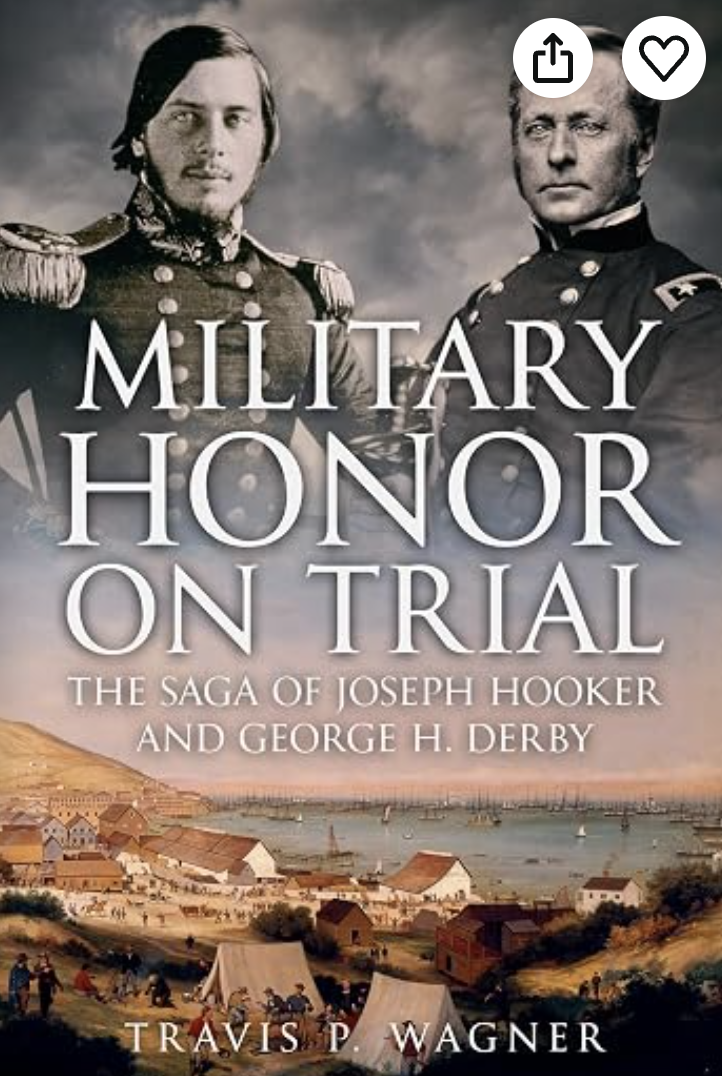
A newly published historical work, Military Honor on Trial: The Saga of Joseph Hooker and George H. Derby uncovers a critical prelude to the Civil War—revealing how an explosive antebellum feud in frontier California forged the personal animosities that later disrupted Union high command.
Long before he took command of the Army of the Potomac before Chancellorsville, Major General Joseph "Fighting Joe" Hooker was involved in a high-stakes conflict during the Gold Rush in California. Charged with army profiteering while locked in a bitter dispute with fellow officer and famous humorist Lt. George H. Derby, Hooker was ultimately court martialed.
Serving as the trial's judge advocate was Henry W. Halleck—the man who would eventually become General-in-Chief of the Union Army. The intense personal hostility that arose during this trial created a rift between Hooker and Halleck. This rift had direct consequences on the battlefields of the Civil War. Hooker’s combative personality also led to serious conflicts with McClellan, Burnside, Sherman, and Stanton. This raises a key question: how much did his personality impact his performance?
Military Honor on Trial offers essential context for Civil War historians and enthusiasts by examining:
The Pre-War Roots of Civil War Factionalism: How antebellum rivalries, personal honor disputes, and officer corps politics directly shaped the temperaments and strategic choices of future wartime leaders.
The Hooker-Halleck Feud: The origins of the toxic relationship between two of the Union’s most prominent generals. It sheds light on high-command friction ahead of Chancellorsville and the Atlanta campaign.
19th-Century Military Justice: A rare look at how the military court system operated on the frontier and how it affected officer careers on the eve of national conflict.