The USS “Monitor” was the U.S. Navy’s first ironclad warship. The vessel, which sank off of North Carolina in 1862, revolutionized naval warfare
Sarah Kuta - Daily Correspondent
March 11, 2026
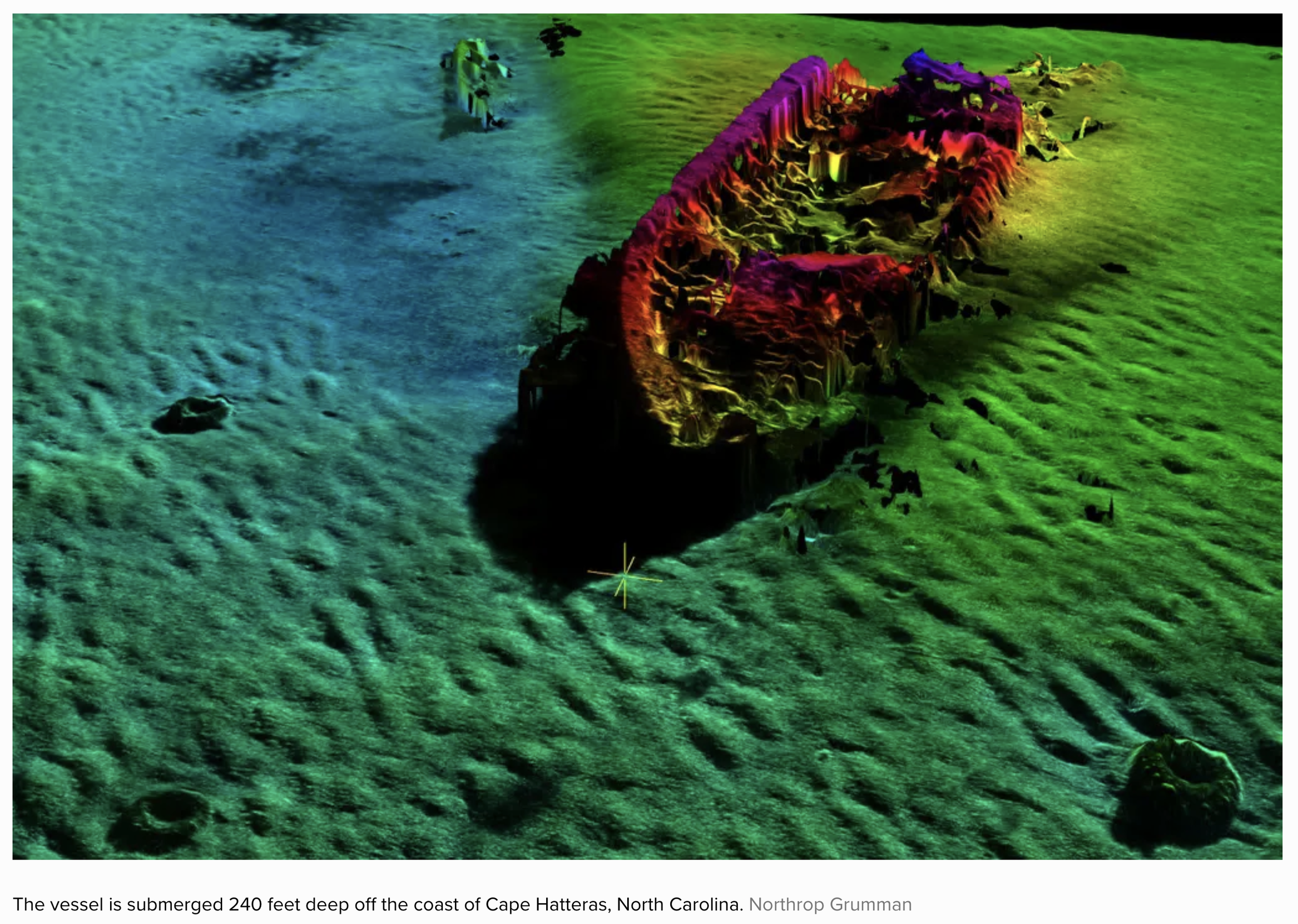
The vessel is submerged 240 feet deep off the coast of Cape Hatteras, North Carolina. Northrop Grumman
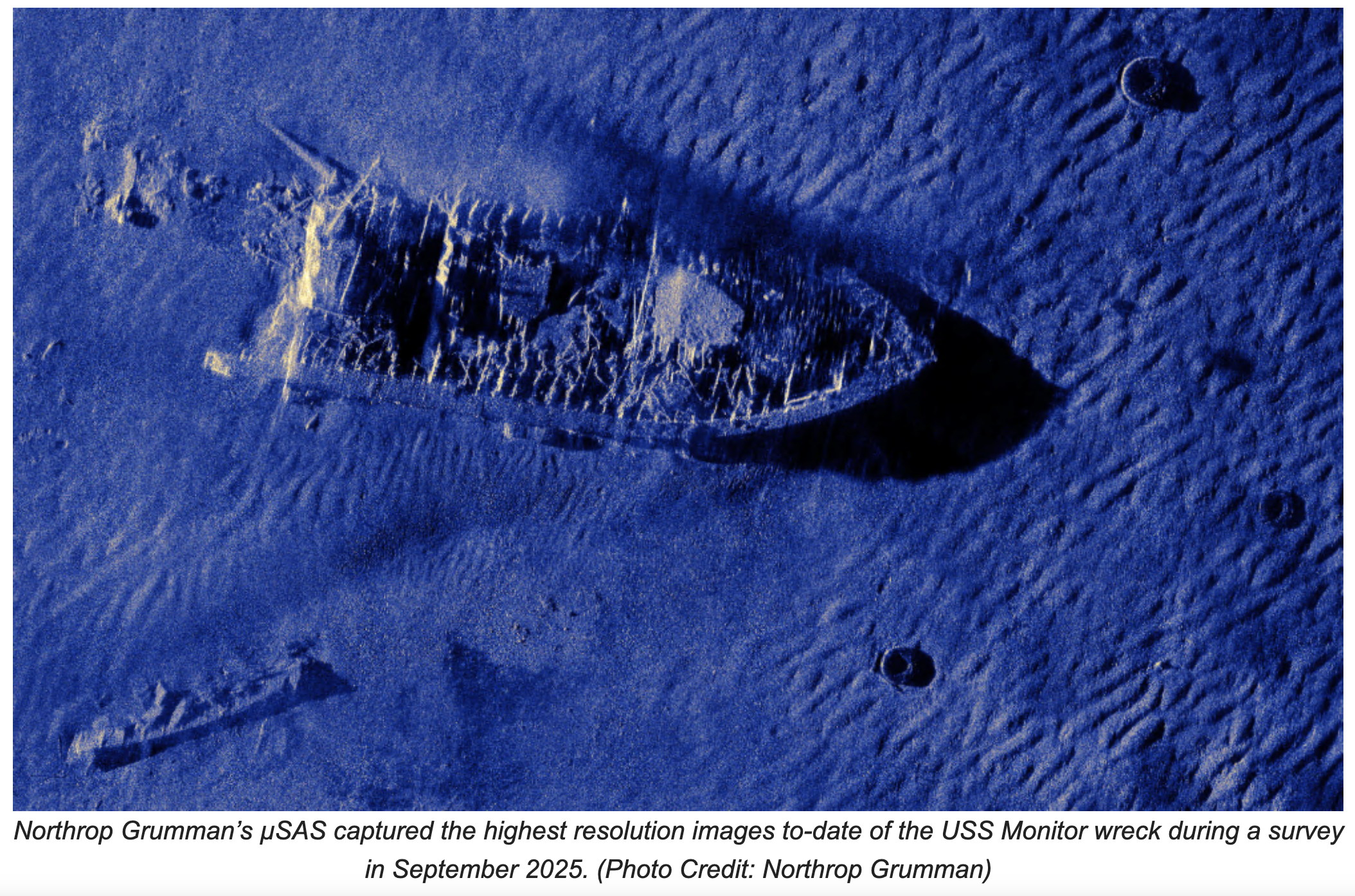
On December 31, 1862, the USS Monitor—the U.S. Navy’s first ironclad warship—sailed into a storm and sank off the coast of North Carolina. Now, more than 160 years later, experts have produced the first high-resolution sonar images of the Monitor, offering an unprecedented look at the pioneering Civil War vessel as it rests on the bottom of the Atlantic Ocean.
In September 2025, scientists with the National Oceanic and Atmospheric Administration (NOAA), Stantec and Northrop Grumman surveyed the Monitor shipwreck using an autonomous underwater vehicle equipped with specialized sonar mapping technology.
The scan produced highly detailed images that scientists are now using to study features that were previously obscured by the murky water, including the vessel’s internal framework, reports WVEC-TV’s Jordie Clark.
Researchers were also surprised to see the wreck was still in “fantastic shape,” Tane Casserley, a maritime archaeologist with the Monitor National Marine Sanctuary, tells the Virginian-Pilot’s Emma Rose Brown.
Moving forward, the team plans to use the technology to keep an eye on the protected site and track changes to the vessel over time, such as corrosion or damage from storms and currents.
“It’s a great baseline to see what the heck is happening at the shipwreck,” Casserley tells WAVY-TV’s Angela Bohon. “It’s difficult to visit. It’s very deep. There’s only so much we can do as scuba divers. But now we got this.”
The data is also being used to develop educational tools that will give members of the public a chance to explore the wreck virtually. “When you talk to kids about history, it’s not just a static drawing or an old photograph or a painting,” Casserley adds. “Now we have a 3D model that comes alive, and it’s making those connections.”
In late 1861, after learning that the Confederate Navy was building an armored warship, President Abraham Lincoln called for the construction of an ironclad vessel to lead the Union Navy. John Ericsson, a Swedish-American engineer and inventor, put forth a plan for a new ship with thick armor and a gun turret that rotated nearly 360 degrees.
On February 25, 1862, the Monitor was officially commissioned in New York City, according to Naval History and Heritage Command. The ship was met with skepticism.
In 1975, NOAA designated the Monitor wreck site as the first national marine sanctuary in the country.
“Resembling a 173-foot-long black lozenge, it looked more like a submarine than a surface warship,” wrote Wendy Mitman Clarke for Smithsonian magazine in 2002. “The flat deck cleared the water by only 14 inches when the ship was loaded. In the middle sat the gigantic and ungainly turret, shaped like a pillbox.”
Strange appearance or not, the vessel had a job to do: protect the Union Navy’s wooden fleet. In early March 1862, the Monitor clashed with the CSS Virginia during the Battle of Hampton Roads, the first Civil War scuffle between ironclad warships. After four hours of fighting, the battle ended in a stalemate, with each ship’s armor stronger than its opponent’s firepower. Though neither side prevailed, the clash ushered in a new era of naval warfare.
Later that same year, the Monitor was called in to support Union operations elsewhere. Being towed by the USS Rhode Island, the Monitor departed Hampton Roads on December 29, 1862. Everything was going as planned until a storm struck off the coast of Cape Hatteras, North Carolina, on New Year’s Eve.
While being lashed about by the wind and the waves, the Monitor began to leak and fill with water. Though the Rhode Island tried to rescue as many of the Monitor’s 62 crew members as possible, 16 men perished as the ship slipped into the Atlantic.
The shipwreck was located in 1973, resting upside down roughly 240 feet beneath the surface. Experts have since recovered more than 200 tons of artifacts from the wreck, including the Monitor’s pioneering gun turret.